A little bit of math

This is a problem I found in one of Google’s entrance tests. You don’t need to be the natural descendant of Euler to answer it, and please, I beg you not to Google and post the answers.


1
1 1
2 1
1 2 1 1
1 1 1 2 2 1

What is the next line?

The answer shalt be revealed in a week.

Laptop storage gets flashy

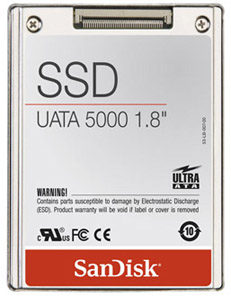
SanDisk on Thursday released a 32GB drive for commercial notebooks that stores information on flash memory chips rather than the magnetic platters that make up a traditional hard drive.

Such a swap will make thin laptops faster and more reliable.


Source: Seagate

Why go flash?

Unlike traditional hard drives, flash memory drives do not contain moving parts. As a result, flash devices are less prone to breaking down–flash cards can survive drops from great heights–and consume less energy.

Flash also can retrieve data faster. In its own tests, Sandisk says its flash drive can boot-up Windows Vista–the next version of the Windows operating system–in 35 seconds, a half-minute faster than the 55-second boot-up time required with a conventional drive.

Military and aerospace customers have been buying so-called solid-state flash drives for about a decade. Some of the drives have capacities of 256GB and are quite sophisticated.

What’s the catch?

The flash drive isn’t for everyone. At 32GB, it is far smaller than the conventional drives found in current notebooks, desktops or even MP3 players. Many business users, however, never max out the capacity on their drives.

The drive will also add about $600 to the cost of a notebook. Those prices will hinder sales.

Meanwhile, drive makers point out that hard drives also continue to increase in data density and are far less expensive. Hitachi executives have said drives that can hold a terabyte of data are on the horizon.

Internet video will choke flash. An hour of standard video gobbles up about 1GB, while an hour of high-definition video will take up 4GB, according to various estimates.

Still…
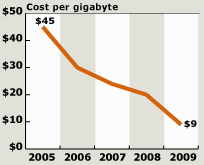
The capacity and price gaps will begin to erode over time. NAND flash memory makers (NAND is the kind SanDisk makes) have managed to double the storage capacity of its chips nearly every year for the past few years.

With growth actually exceeding Moore’s Law, who knows, in another two or three year’s time, our laptops may just get a little flashier!

Sources: CNET.com, Wikipedia

Apple Sued for iPod Monopoly, Defective iBooks

The hip computer maker battles with another headache

Shortly following news of Apple’s stock options backdating scandal, the Associated Press is reporting that the company is now facing several lawsuits, including one alleging that Apple is monopolizing the digital music market.

The lawsuit is over Apple’s proprietary iPod and iTunes software, which is generally incompatible with non-Apple products. Media purchased on iTunes is supposed to be playable only on iPod hardware, and songs purchased on other DRM systems are not easily playable on iPods.

Apple motioned for the courts to dismiss the case, originally filed July 21, but the courts denied the motion on Dec. 20. The plaintiff seeks unspecified compensation.

Apple is also facing a lawsuit, filed on Nov. 7, over the supposed high failure rate of the logic board in the iBook G4. Another lawsuit filed by PhatRat Technology accuses Apple of patent infringement for its iPod-Nike product.

While the iPod reigns supreme in the music player market, Apple’s success has not come without a price. Last year, Creative Labs sued Apple over patent infringement of the iPod interface, which eventually lead to a countersuit. The companies eventually settled on having Apple pay Creative $100 million for use of the patented technology.

The popularity of the iPod has drawn attention from hackers discontent with the proprietary nature of the device. Jon Lech Johansen, who cracked DVD encryption, has undone Apple’s protection scheme and plans to license his work to companies interested in opening up interoperability between iPod/iTunes and non-Apple devices.

Linky


Blogging is Sharing!

Blogging is all about sharing Information with each other through World Wide Web. The aim of starting Natural Log of Exun (i.e. lnexun) was to create an environment, where ALL the Exun Members share their Exploration of Knowledge not only among themselves but to ALL those who are enthusiastic to know more and more in the field of Technology.

Blogging is an Art, which gets energized with the Information Sciences. Presenting articles on the Blog seems to be very simple – but realizing its potential readership plays most important role. Here are some tips to make a good post on the Blogs:

  • Use Arial Family Fonts [Arial/Tahoma/Verdana/Trebuchet] for the normal Text.
  • Use Courier Font for the Text illustrating some programming Code.
  • Use Normal size font, unless it is essentially required to highlight special points.
  • While COPY-PASTE of Text from any Web Page or Pre-Formatted Document – It is advisable to PASTE the Text in a NOTEPAD (or any Text Editor), it will help you to remove the earlier formatting from the Text.
  • It is advisable to Justify the Text, unless it is required to Right/Center/Left align it for some specific reason/purpose.
  • It is advisable to provide a link with proper Link Caption, wherever Reference is required.
  • If you are planning to insert a photograph in the Post, make sure that the Photo/Picture is of reasonably good quality and reasonably sized (suggested size 320 px X 240px around 20 KB).
  • Allow your real name to appear with your Posts – It helps people to know you more (Nicknames always shrink you into a smaller group) .
  • At last make sure, you are posting an article without any Objectionable content/language (Avoid Slangs).

Happy Posting in the NEW YEAR

Ink Jet Technology to Help Make Muscle and Bone Cells

Printed ‘bio-inks’ could revolutionize range of replacement tissues for disease, injury

A Pittsburgh-based research team has created and used an innovative ink-jet system to print “bio-ink” patterns that direct muscle-derived stem cells from adult mice to differentiate into both muscle cells and bone cells. Technology could revolutionize the design of replacement body tissues and one day benefit millions of people whose tissues are damaged from a variety of conditions, including fatal genetic diseases like Duchenne Muscular Dystrophy (DMD), wear and tear associated with aging joints, accidental trauma, and joint deterioration due to autoimmune disorders.

“Previously, researchers have been limited to directing stem cells to differentiate toward multiple lineages in separate culture vessels. This is not how the body works: the body is one vessel in which multiple tissues are patterned and formed. The ink-jet printing technology allows us to precisely engineer multiple unique microenvironments by patterning bio-inks that could promote differentiation towards multiple lineages simultaneously,” explained Phil Campbell, research professor at Carnegie Mellon’s Institute for Complex Engineered Systems.

“Controlling what types of cells differentiate from stem cells and gaining spatial control of stem cell differentiation are important capabilities if researchers are to engineer replacement tissues that might be used in treating disease, trauma or genetic abnormalities,” said Lee Weiss, research professor at Carnegie Mellon’s Robotics Institute.

The custom-built ink-jet printer, developed at Carnegie Mellon’s Robotics Institute, can deposit and immobilize growth factors in virtually any design, pattern or concentration, laying down patterns on native extracellular matrix-coated slides (such as fibrin). These slides are then placed in culture dishes and topped with muscle-derived stem cells (MDSCs). Based on pattern, dose or factor printed by the ink-jet, the MDSCs can be directed to differentiate down various cell-fate differentiation pathways (e.g. bone- or muscle-like).

The long-term promise of this new technology could be the tailoring of tissue-engineered regenerative therapies. In preparation for preclinical studies, the Pittsburgh researchers are combining the versatile ink-jet system with advanced real-time live cell image analysis developed at the Robotics Institute and Molecular Biosensor and Imaging Center to further understand how stem cells differentiate into bone, muscle and other cell types.

Link
Now for all those who were thinking to throw their inkjet cartridges away, hold on you may need them later.